
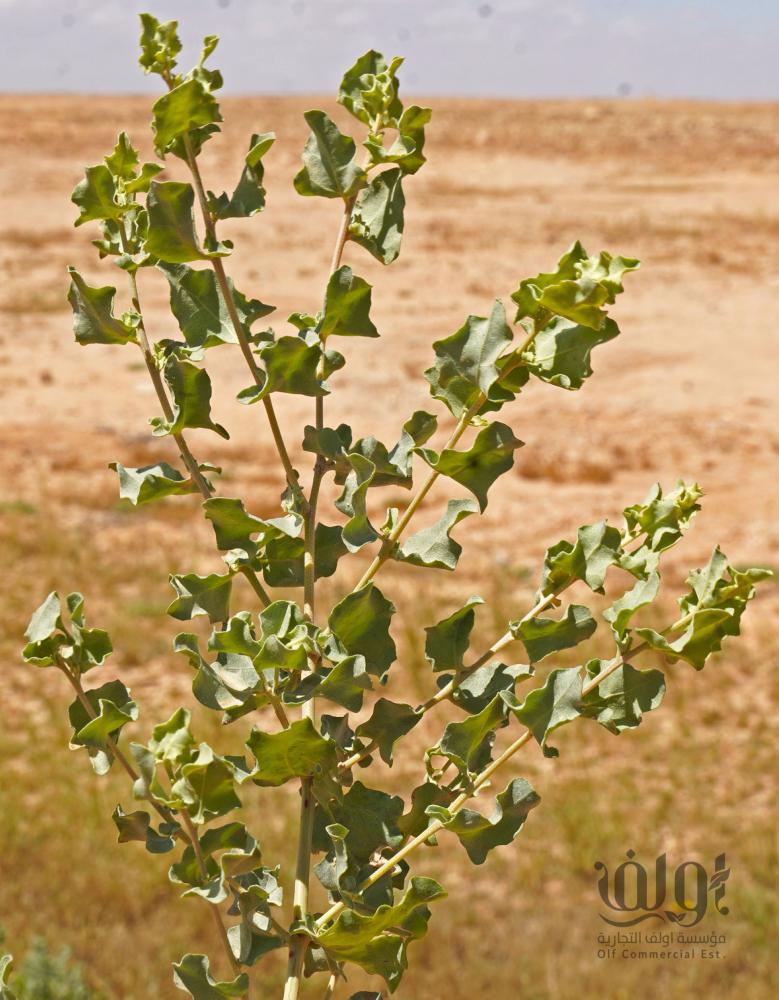
Atriplex halimus (scientific name: Atriplex halimus ) is a wild perennial plant belonging to the Amaranthaceae family. It is known locally in the Gulf regions by several names, such as: raghal, wild raghal, or white ramth . It is known for its high ability to adapt to harsh environmental conditions, such as drought and soil salinity, and is considered an important pastoral plant in desert regions.
Botanical description
- The ragal is a perennial shrub that ranges in height from 1 to 3 meters.
- Its small, oval leaves are covered with a waxy layer that reflects sunlight and reduces water loss.
- Its flowers are small, unattractive, and yellow or light green in color.
- Its deep roots help it absorb water from distant layers of the earth.
Habitat and distribution
The plant is spread in:
- Mediterranean regions.
- Arabian Peninsula, especially in desert and Gulf environments.
- Salty lands and dry coasts.
Environmental importance
- 🌱 Combating desertification : It contributes to soil stabilization and preventing erosion.
- 🐑 Grazing : It is used as food for camels, sheep and goats due to its tolerance to difficult conditions.
- 🌿 Pasture rehabilitation : It is planted in afforestation and environmental protection programs.
Farming methods
- Seed Selection : Pure ragal seeds are used to ensure quality germination.
- Suitable soil : It grows in sandy and saline soil.
- Planting method : Plant the seeds at a depth of 1-2 cm.
- Watering : It needs moderate watering at first, then it tolerates drought after growth.
Uses
- Environmental agriculture : It is grown in afforestation and desertification control projects.
- Pasture : A basic grazing plant for livestock.
- Soil : Improves soil fertility in the long term.
In the Arabian Gulf
The ragal is considered a traditional wild plant in the Gulf environment, where it is widely grown in pastures and used in government and private projects to restore natural vegetation.